salakhalimunmountain.com – There is a specific moment of profound stillness that occurs only on the highest ridges of West Java, just before the world wake ups. Watching the sunrise above the Halimun clouds is not merely a visual event; it is a spiritual transition. As the heavy rainforest air begins to stir with the first hints of dawn, the vast canopy below remains submerged in a thick, rolling sea of white mist, leaving only the volcanic peaks of Salak and Gede Pangrango standing like islands in an ethereal ocean. To stand on a ridge in the Halimun sector at 5:30 AM is to witness the very moment the “Hidden Mountain” earns its name. As your guide, I want to share the secrets of timing, location, and preparation so that you can stand where the dense canopy light first breaks, transforming the grey shadows of the night into a landscape of liquid gold and deep emerald.
The Magic of the “Sea of Clouds”
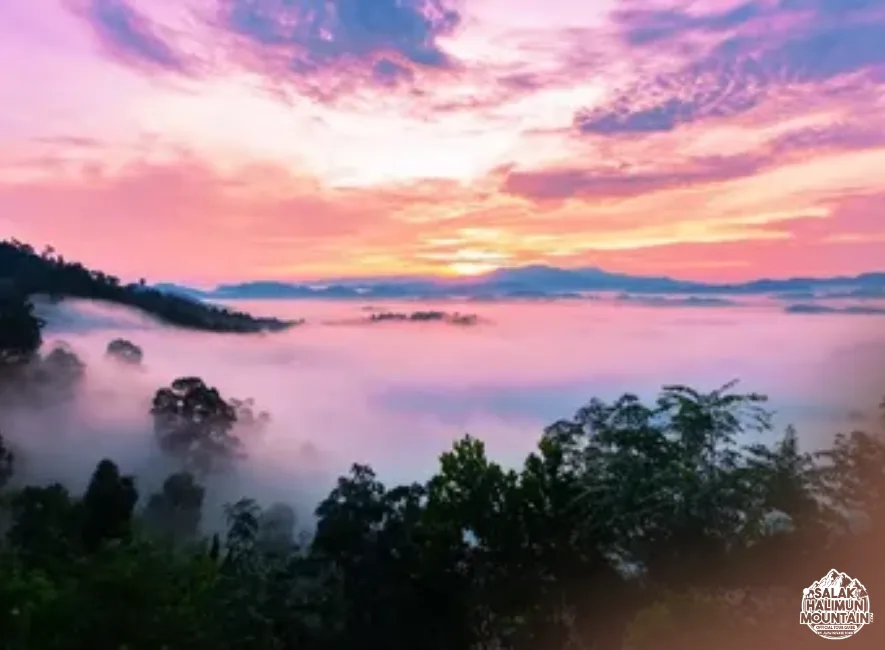
The phenomenon that makes watching the sunrise above the Halimun clouds so spectacular is the temperature inversion common in the highland rainforest. During the night, the cold air sinks into the valleys, trapping moisture and creating a dense layer of “Halimun” (mist). When you trek to a high vantage point like the Citalahab ridges or the slopes near the tea plantations, you are climbing above this weather layer. From the top, the clouds look solid enough to walk upon, stretching as far as the eye can see toward the horizon. This “Sea of Clouds” is a signature of the park, providing a dramatic, minimalist backdrop for the sun’s daily return.
As the sun begins to crest the distant horizon, the colors of the clouds shift from a ghostly blue to soft pinks and deep oranges. The heavy rainforest air is crisp and biting at this altitude, adding to the feeling of being in a world apart. Watching the sunrise above the Halimun clouds allows you to appreciate the scale of the Javanese wilderness in a way that ground-level trekking cannot. It is the only time when the complexity of the jungle is simplified into a single, breathtaking horizon. For many travelers, this silent half-hour before the heat of the day begins is the highlight of their entire journey into the national park.
The Best Vantage Points: Citalahab and Beyond
Finding the perfect spot for watching the sunrise above the Halimun clouds requires a bit of pre-dawn effort. One of the most famous locations is the high ground near the Citalahab Central village. From here, you can see the sun rising behind the silhouette of Mount Salak, its jagged craters catching the first light. The path involves a short but steady climb on soft mud trails, navigating through the ancient trees while the forest is still dark. We always use headlamps and move with quiet focus, listening to the first “shout” of the Javan Gibbon that often signals the coming light.
Another incredible spot is the Nirmala Tea Plantation area. Because the tea bushes are kept low, the view is completely unobstructed. Here, you can watch the sunrise above the Halimun clouds as it illuminates the perfectly manicured rows of tea, making the emerald leaves glow with an intense, neon vibrance. The contrast between the wild, primary forest of the national park and the orderly beauty of the plantation creates a unique photographic opportunity. Whether you prefer the deep woods or the open vistas, the Halimun sector offers a variety of stages for the sun’s morning performance.
The Morning Symphony: Life at Dawn
Watching the sunrise above the Halimun clouds is a multisensory experience. As the first rays of light hit the upper layers of the forest, the “dawn chorus” begins. This is the moment when the birds and primates of the park are most vocal. The piercing calls of the Javan Hawk-Eagle often cut through the air as it takes to the first thermals, while the melodic songs of the bulbuls and sunbirds fill the heavy rainforest air. The forest literally “wakes up” around you, a transition that feels both energetic and ancient.
This is also the best time for wildlife spotting. Many animals that were active during the night are making their way back to their dens, while the daytime residents are beginning their search for food. While watching the sunrise above the Halimun clouds, keep your binoculars ready. You might see the silver flash of a Javan Gibbon swinging through the high branches or a colorful barbet perched on a moss covered rock, warming its feathers in the new sun. The light at this hour is soft and golden—the “golden hour” for photographers—revealing details of the vertical garden that are washed out by the harsh glare of midday.
Preparation: What to Bring for a Dawn Trek
To fully enjoy watching the sunrise above the Halimun clouds, preparation is key. The temperature on the ridges can be surprisingly low before dawn, often dropping to 10-15°C. We recommend dressing in layers: a moisture-wicking base layer, a warm fleece, and a windproof outer shell. Sturdy boots are essential for the soft mud trails, which can be slippery with morning dew. Don’t forget a warm hat and gloves; the mountain wind can be sharp while you are waiting for the sun to break the horizon.
We always carry a thermos of hot Sundanese coffee or ginger tea to share while we wait. There is nothing quite like the feeling of a warm cup in your hands as you watch the sky change color. A high-quality headlamp with extra batteries is a must for the pre-dawn trek, and a small sitting mat can make the wait on the moss covered rocks much more comfortable. By being prepared for the cold and the dark, you ensure that your focus remains on the beauty unfolding in front of you rather than on your own discomfort. The sunrise is a reward for those who are ready for the mountain’s conditions.
Capturing the Light: Photography Tips
Watching the sunrise above the Halimun clouds offers some of the best photography opportunities in all of Java. To capture the “Sea of Clouds,” you need to manage the high dynamic range between the bright sun and the dark forest. Using a tripod is highly recommended to keep your images sharp in the low pre-dawn light. We suggest using a graduated neutral density filter if you have one, or shooting in RAW format to allow for better exposure balancing during editing. The goal is to capture the delicate textures of the mist without overexposing the sun.
Focus on the silhouettes. The jagged peaks of Mount Salak and the gnarled branches of the ancient trees make for dramatic foreground elements against the glowing sky. Don’t just look at the sun; look at the way the light hits the moss covered rocks and the dew on the giant ferns. The backlighting can create a “halo” effect around the plants and animals, highlighting the intricate details of the heavy rainforest air. Photography at dawn in Halimun is about capturing the atmosphere and the sense of scale—the feeling of being a small observer in a vast, waking world.
The Spiritual Connection: Silence and Reflection
Beyond the photos and the wildlife, watching the sunrise above the Halimun clouds is a time for silence. In the modern world, we are rarely afforded moments of true, natural quiet. On the mountain, as the sun rises, there is a sense of peace that is almost tangible. We often encourage our guests to put their cameras down for at least ten minutes and just be present. The steady movement of the clouds and the gradual warming of the heavy rainforest air create a meditative state that can be deeply rejuvenating.
Local communities often consider the sunrise to be a sacred time, a moment of renewal for the land and its people. By watching the sunrise above the Halimun clouds, you are participating in a ritual that has occurred for millions of years. It is a reminder of the Earth’s resilience and the beauty that exists when we protect our wild spaces. You return to the trailhead with a clearer mind and a lighter spirit, carrying the golden light of the mountain with you. This emotional connection to the landscape is what turns a simple trek into a life-changing adventure.
The Return Trek: Exploring the Waking Forest
Once the sun has fully risen and the “Sea of Clouds” begins to dissipate into the valleys, the journey is far from over. The walk back down from watching the sunrise above the Halimun clouds is a completely different experience than the walk up. In the full, dense canopy light, you will see the details you missed in the dark. The soft mud trails are now illuminated, revealing the tracks of nocturnal animals like the leopard or the civet. The vertical garden of orchids and ferns is now clearly visible, draped in the morning’s diamond-like dew.
This is a great time to explore the waterfalls and streams that are common in the Halimun sector. The morning light filtering through the trees creates beautiful patterns on the water’s surface, and the forest feels fresh and full of energy. We often take a slower pace on the way back, stopping to identify the seasonal flowers or watch the butterflies as they begin to flutter in the warmth. The morning trek is the perfect completion of the sunrise experience, allowing you to see the forest in its most vibrant and active state. It’s the perfect way to start a full day of adventure in the Halimun Salak wilderness.
Safety and Ethical Guidelines for Dawn Treks
Safety is our primary concern when watching the sunrise above the Halimun clouds. Trekking in the dark requires a high degree of caution. We always stay on the established paths to avoid disturbing the nocturnal wildlife or accidentally damaging sensitive plants. It is also important to be mindful of your footing on the moss covered rocks, which can be extra slick in the morning humidity. We keep our groups small and move in a tight formation to ensure everyone is safe and accounted for during the ascent.
Ethical guidelines are just as important. While the sunrise is a moment of beauty, we must ensure we don’t leave any trace of our presence. This means taking all trash back with us and keeping noise to a minimum so as not to disturb the nesting birds and waking primates. The silence is part of the experience for everyone on the mountain. By following these simple rules, we ensure that the ridges remain a pristine sanctuary for both the wildlife and the travelers who come after us. The mountain belongs to the mist and the sun; we are merely there to witness their dance.
Conclusion: The Golden Heart of Java
Watching the sunrise above the Halimun clouds is an experience that stays in your heart long after the mist has cleared. It is a moment where the physical beauty of the volcanic landscape meets the quiet mystery of the rainforest. In the light of a Halimun morning, you see Java as it has always been—wild, majestic, and full of life. We invite you to wake up early, to brave the cold, and to climb with us into the sky. The first light is coming, and there is no better place on Earth to greet it. The “Hidden Mountain” is ready to reveal its golden heart.
So, if you’re ready to explore the wonders of Mount Salak Halimun, head over to our ONLINE BOOKING PAGE and let’s start planning your adventure. Or simply CLICK THIS LINK to chat with us on WhatsApp.
With our team, you’re not just getting a guide; you’re gaining a local friend who will ensure your trip is nothing short of extraordinary.